Ljubljana, 15 June 2026
On Monday, 15 June 2026, the Slovenian National Assembly adopted amendments to the Local Elections Act that, among other changes, revoke local voting rights for third-country nationals (non-EU citizens) holding permanent residence permits in Slovenia. These individuals have lived in the country for many years, work, pay taxes, raise children, contribute to local communities, and form an integral part of Slovenian society.
The amendment is controversial because it restricts the political rights of a group of residents who acquired these rights more than two decades ago. It was considered under a fast-track legislative procedure and at the very beginning of the parliamentary term, thereby preventing the broader public and expert debate that such a significant departure from democratic standards would undoubtedly require. It represents a broader undermining of political participation, particularly as electoral legislation is being changed just before the autumn local elections.
The removal of voting rights will disenfranchise approximately 100,000 people. It turns the right to vote into a political tool—perhaps a quick fix intended to “reassure” the public during a period of growing global uncertainty and rising living costs. Once again, foreigners have become a convenient excuse for diverting attention away from the many challenges facing local government. In this context, we are left wondering whether the proponents of this measure have also taken away the voting rights of some of the very people who supported them in previous local elections.
The right to vote is one of the fundamental pillars of democracy, based on the principle that people who live in a given community should have the opportunity to participate in decisions affecting their everyday lives. Voting rights are not a privilege but a mechanism for inclusion and political participation for people who are permanently connected to the place in which they live. This is not merely a technical issue; it concerns a sense of belonging and social cohesion. It is paradoxical to expect immigrants to integrate into a new environment while simultaneously depriving them of the opportunity to participate in decisions concerning the community of which they are expected to become a part.
Under the legislation currently in force, third-country nationals with permanent residence have voting rights at the municipal level, but not at the national level. This means that they may vote for mayors and municipal council members in the municipality where they permanently reside, but they cannot participate in elections to the National Assembly or in presidential elections. At the local level, they are granted active voting rights—that is, the right to vote—but not passive voting rights, meaning the right to stand for election and be elected. At the local level, passive voting rights are reserved for citizens of the Republic of Slovenia and citizens of other EU Member States.
Voting rights in local elections for third-country nationals are not an exception. Various forms of such rights are recognised by the majority of European Union Member States. In Sweden, Denmark, Portugal, and Lithuania, foreigners may exercise these rights after three years of lawful residence; in Finland, after four years; and in Belgium, the Netherlands, and Hungary after five years. This is not a marginal peculiarity but an established European practice.
In Luxembourg, where voting is compulsory, there are no minimum residence requirements—foreign nationals acquire voting rights by registering on the electoral roll. A similar arrangement exists in Ireland, where all residents, regardless of citizenship, have the right to vote in local elections. Participation does not require permanent residence or many years of residence in the country; living in the local community, being at least 18 years old, and being registered on the electoral roll are sufficient.
Compared with other European countries, Slovenia’s system has already been relatively restrictive, yet it has also been regarded as an example of good practice in the field of integration policies.
During the period of concluding accession negotiations for membership in the European Union, Slovenia, as a young state, sought to demonstrate that it was democratic, committed to solidarity, and aligned with European values. In May 2002, the government of Janez Drnovšek extended local voting rights to foreigners with permanent residence as part of a broader package of democratic reforms. Estonia and Lithuania introduced similar measures in the same year. At the time, proponents of the reform presented it as a democratic standard and as part of Slovenia’s alignment with European political norms.
What, then, do those standards look like today, when the government is arbitrarily stripping a minority segment of the population of voting rights?
Countries that do not (yet) grant voting rights to third-country nationals, or that restrict them, have developed other mechanisms for political inclusion. In Austria, Germany, Italy, and Greece, where foreigners do not have voting rights, migrant councils, integration commissions, and other advisory bodies provide institutional representation for migrant communities and facilitate dialogue with local authorities.
Although such mechanisms do not replace voting rights, they constitute important channels through which migrants can participate in shaping local policies and decisions that affect their daily lives. Advisory bodies also exist in Luxembourg, Belgium, Spain, and the Netherlands, even though these countries allow foreigners to exercise voting rights at the local level under certain conditions.
Germany, which does not grant voting rights to third-country nationals and at the same time has a high proportion of residents with a migrant background, simplified access to German citizenship in June 2024. Rather than restricting political rights, it chose an inclusive approach: facilitating naturalization and thereby expanding access to full political participation, including universal suffrage.
We strongly oppose the amendments to the Local Elections Act that revoke local voting rights from third-country nationals. We call for the proposed changes to be assessed for their compatibility with the Constitution of the Republic of Slovenia.
We urge the government to recognize the opportunities that come with strengthening inclusion and political participation for all residents of the Republic of Slovenia. At the same time, we emphasize that, alongside voting rights, other forms of participation by foreign residents in democratic processes must also be strengthened. This includes simplifying procedures for acquiring citizenship and establishing municipal councils for immigrant inclusion at the local level. The proposed amendments would affect approximately 100,000 permanent residents, making this one of the largest restrictions of political participation in Slovenia since independence.
Slovenia was built not only by its citizens, but also by generations of people who came from other parts of former Yugoslavia and made their lives here. Many of those affected by the proposed changes have spent decades contributing to Slovenian society, economy, and local communities. A democracy confident in itself expands participation and inclusion; it does not narrow them. Excluding long-term residents from local democratic life sends a message that contribution, belonging, and participation matter less than formal status. This is not a path toward stronger democracy, but toward a more divided society.
Political rights also belong to people who permanently live in a community, even if they are not its citizens. Modern democracies are based not only on majority rule but also on the protection of minorities, respect for human rights, constitutional limits on power, and the inclusion of groups that lack political influence. In democratic systems, the question is not only who wins elections, but also who is included in the political community in the first place. At stake is a fundamental question: does the Republic of Slovenia regard foreign nationals with permanent residence as equal members of the local communities in which they live?
The question, therefore, is not merely whose voice was taken away today. The real question is what kind of democracy we want to build: one that includes people and encourages their participation in public life, or one that denies a political voice to part of the population despite the fact that they live, work, and contribute to the development of the communities they call home.
Lana Zdravković, PhD Researcher — Peace Institute Slovenia
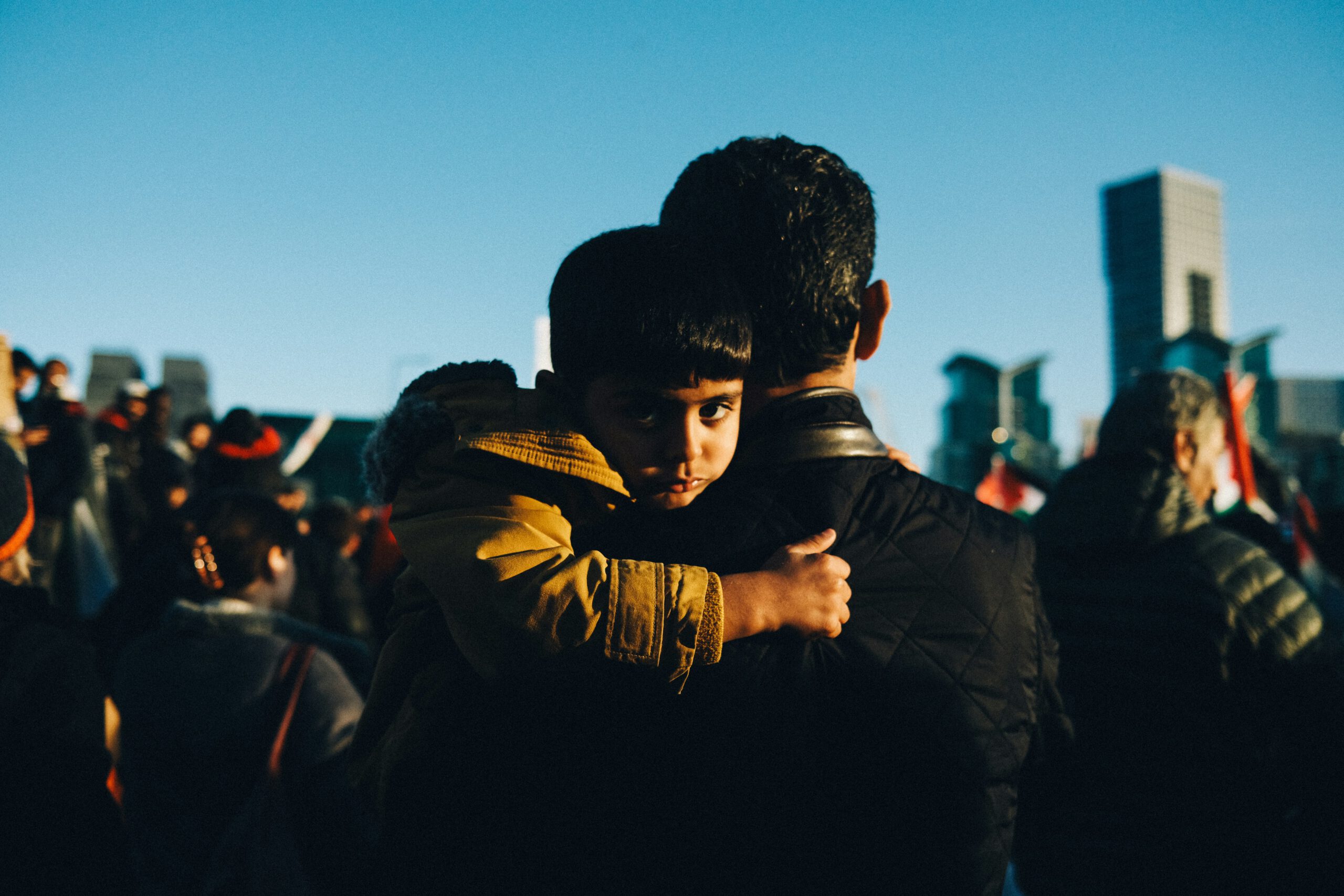
Photo by Glen Carrie on Unsplash